It was a Tuesday. You know those Tuesdays where you’re tired, the grocery store is nearly empty, and you’re staring into your fridge like it owes you money. That was me. I had half a package of spaghetti, a bruised avocado that needed to be used immediately, and a lonely ball of fresh burrata sitting in the dairy case. Honestly, I wasn’t planning on making anything special. I just wanted something warm and creamy to melt away the stress of the workday.
But then I saw the pistachios. They were roasted, salted, and waiting in the back of my pantry like they had a secret to share. I tossed them into the blender with some basil, garlic, lemon juice, and a splash of olive oil. The moment that bright green pesto hit the hot pasta water, the kitchen filled with this incredible, nutty aroma. It smelled like summer, even if it was freezing outside.
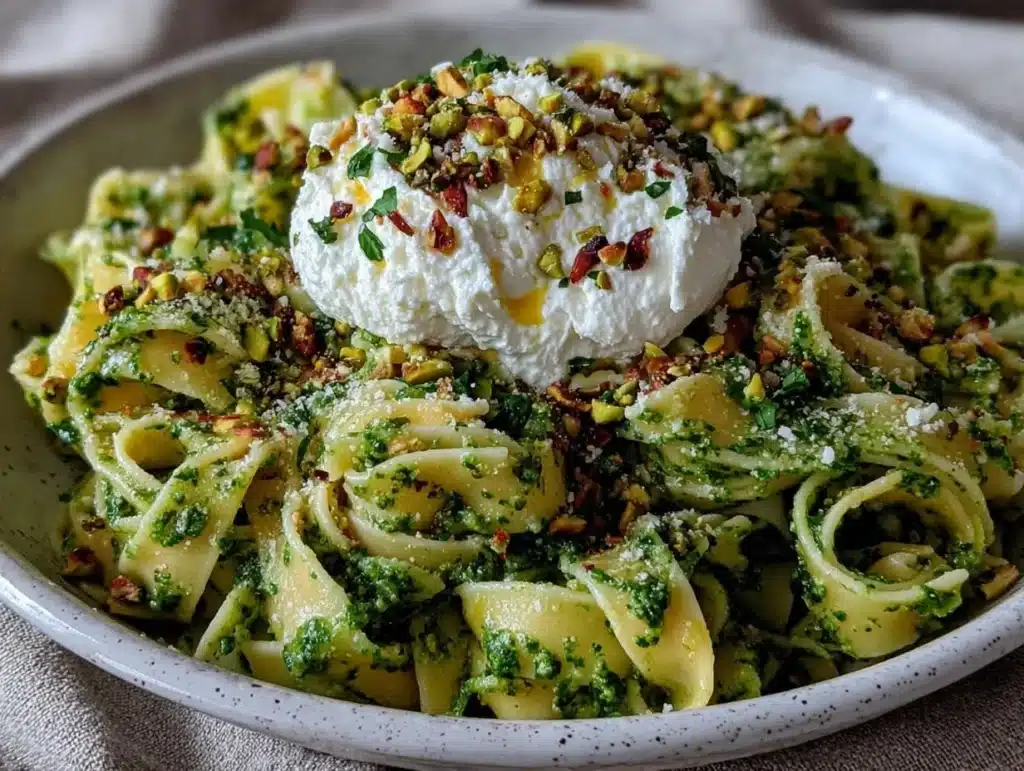
When I broke into that burrata, the creamy white cheese swirled into the green sauce, creating this luxurious, velvety texture that I still dream about. It wasn’t just dinner; it was comfort. It was fancy, but it took less time than ordering takeout. That night, I realized that creamy burrata pistachio pesto pasta isn’t just a recipe. It’s a mood. It’s the kind of meal that makes you feel like you’ve got your life together, even if you’re eating it in your pajamas.
I’ve made this dish over a dozen times since then. Sometimes I add shrimp, sometimes I keep it simple. But the core magic remains the same. It’s rich, it’s fast, and it’s deeply satisfying. If you’re looking for a meal that feels indulgent but comes together in under 30 minutes, you’re in the right place. Let’s make some magic happen.
Why You’ll Love This Recipe
Let’s be real for a second. We all have that one dish we make over and over again because it just works. For me, that’s this creamy burrata pistachio pesto pasta. It’s not just another pasta recipe; it’s a game-changer. After testing this with different cheeses and nuts, I found that the combination of salty pistachios and rich burrata creates a flavor profile that is incredibly balanced. It’s savory, nutty, and fresh all at once.
Here is why this recipe has earned a permanent spot in my weekly rotation:
- Quick & Easy: You can have this on the table in 20 to 30 minutes. It’s perfect for busy weeknights when you don’t want to sacrifice quality for speed.
- Simple Ingredients: You likely have most of this in your kitchen already. Fresh basil, pasta, nuts, and cheese. No fancy grocery trips needed.
- Perfect for Date Night: It feels elegant and restaurant-quality, but you’re making it in your own home. It’s impressive without being stressful.
- Crowd-Pleaser: Even the pickiest eaters usually love this. The creaminess from the burrata masks the strong flavors, making it approachable for everyone.
- Unbelievably Delicious: The texture contrast between the al dente pasta, the crunchy pistachios, and the melting burrata is next-level comfort food.
What makes this different from standard pesto pasta? It’s the finish. Traditional pesto can be sharp and oily. By folding in burrata at the end, you create a silky emulsion that coats every strand of pasta. It’s not just good; it’s the kind of bite that makes you close your eyes and sigh. It’s comfort food reimagined—healthier, faster, but with the same soul-soothing satisfaction.
I’ve served this to friends who are serious about their Italian cooking, and they always ask for the recipe. It’s the kind of dish that turns a simple Monday into a celebration. Plus, it’s vegetarian-friendly, so it fits into most diets without feeling like you’re missing out.
What Ingredients You Will Need
This recipe relies on high-quality, simple ingredients to deliver bold flavor and satisfying texture without the fuss. Since the sauce is so simple, the quality of each component really shines through. You don’t need a long list of spices or complicated pastes. Just fresh, wholesome foods that taste like they belong together.
Here is what you’ll need to gather before you start cooking:
- Pasta: I recommend using spaghetti or linguine. These long strands hold the sauce beautifully. Use about 1 pound (450g) of your favorite dried pasta. Whole wheat works too if you want a nuttier flavor.
- Burrata Cheese: This is the star. Look for fresh burrata balls that are soft to the touch. You’ll need 2 large balls (about 8 ounces or 225g total). If you can’t find fresh burrata, fresh mozzarella pearls with a drizzle of cream are a backup, but fresh burrata is worth the trip.
- Pistachios: Use unsalted, roasted pistachios. They add a crucial crunch and a deep green color. About 1 cup (120g) is perfect. Avoid the ones with heavy seasoning; you want the natural nutty taste.
- Fresh Basil: You need a generous amount. About 2 cups of packed fresh basil leaves. This provides the fresh, herbal backbone. If your basil is wilted, the pesto won’t taste as bright.
- Garlic: 2 or 3 cloves of fresh garlic. Don’t use the pre-minced stuff in a jar. Fresh garlic has a sharper, cleaner bite that balances the rich cheese.
- Parmesan Cheese: Grated Parmigiano-Reggiano adds umami and saltiness. Use about 1/2 cup (50g). I prefer buying the wedge and grating it fresh for the best texture.
- Extra Virgin Olive Oil: Use a good quality oil. It makes a huge difference in the final mouthfeel. About 1/3 cup (80ml) is standard, but you can adjust based on how much liquid your blender needs.
- Lemon Juice: Freshly squeezed juice from half a lemon. This cuts through the richness of the cheese and nuts. Bottled lemon juice just doesn’t have that zing.
- Pasta Water: Reserve at least 1 cup of the starchy water from boiling your pasta. This is the secret to a silky sauce that clings to the noodles.
- Salt and Pepper: Sea salt and freshly cracked black pepper to taste. Always season your pasta water generously, like the ocean.
If you are allergic to nuts, you can swap pistachios for toasted pine nuts or even sunflower seeds. For a dairy-free version, you can use a cashew-based cream instead of burrata, though the texture will be different. But honestly, if you can have dairy and nuts, stick with the original. It’s worth it.
Equipment Needed
You don’t need a fancy kitchen to make this. Here is what you’ll actually use:
- Large Pot: For boiling the pasta. Make sure it’s big enough to allow the noodles to move around.
- Blender or Food Processor: A standard blender works best for a smooth pesto. A food processor gives a slightly chunkier texture, which some people prefer.
- Large Skillet or Pan: To toss the pasta with the sauce. A wide pan helps the sauce reduce and coat the pasta evenly.
- Colander: For draining the pasta. Save that pasta water!
- Zester or Microplane: Optional, but great for adding lemon zest for extra aroma.
If your blender is weak, you might need to stop and scrape down the sides a few times. Also, having a large skillet ready before you start boiling pasta helps with timing. It’s all about being organized so the pasta doesn’t get mushy while you wait for the sauce.
Preparation Method
Let’s get cooking. This part is straightforward, but timing is everything. Follow these steps closely for the best results.
- Boil the Pasta: Bring a large pot of salted water to a rolling boil. Add your pasta and cook according to the package directions, but aim for al dente. It should still have a slight bite. Before you drain, scoop out about 1 cup of the starchy pasta water and set it aside. This liquid gold is crucial for the sauce. Drain the pasta and set it aside, but don’t rinse it.
- Make the Pesto Base: While the water is boiling, add the pistachios to your blender or food processor. Pulse them until they are finely chopped but not a paste. This adds texture. Then, add the fresh basil leaves, garlic cloves, grated Parmesan, lemon juice, and half of the olive oil. Pulse until everything is combined and green. If it’s too thick, add a splash of the reserved pasta water or more olive oil.
- Combine Pasta and Pesto: In a large skillet over medium heat, add a tablespoon of olive oil. Add the drained pasta to the skillet. Pour the pesto mixture over the pasta. Toss everything together using tongs. If the sauce looks too thick or dry, add the reserved pasta water a little at a time. The starch in the water helps emulsify the oil and cheese into a creamy sauce.
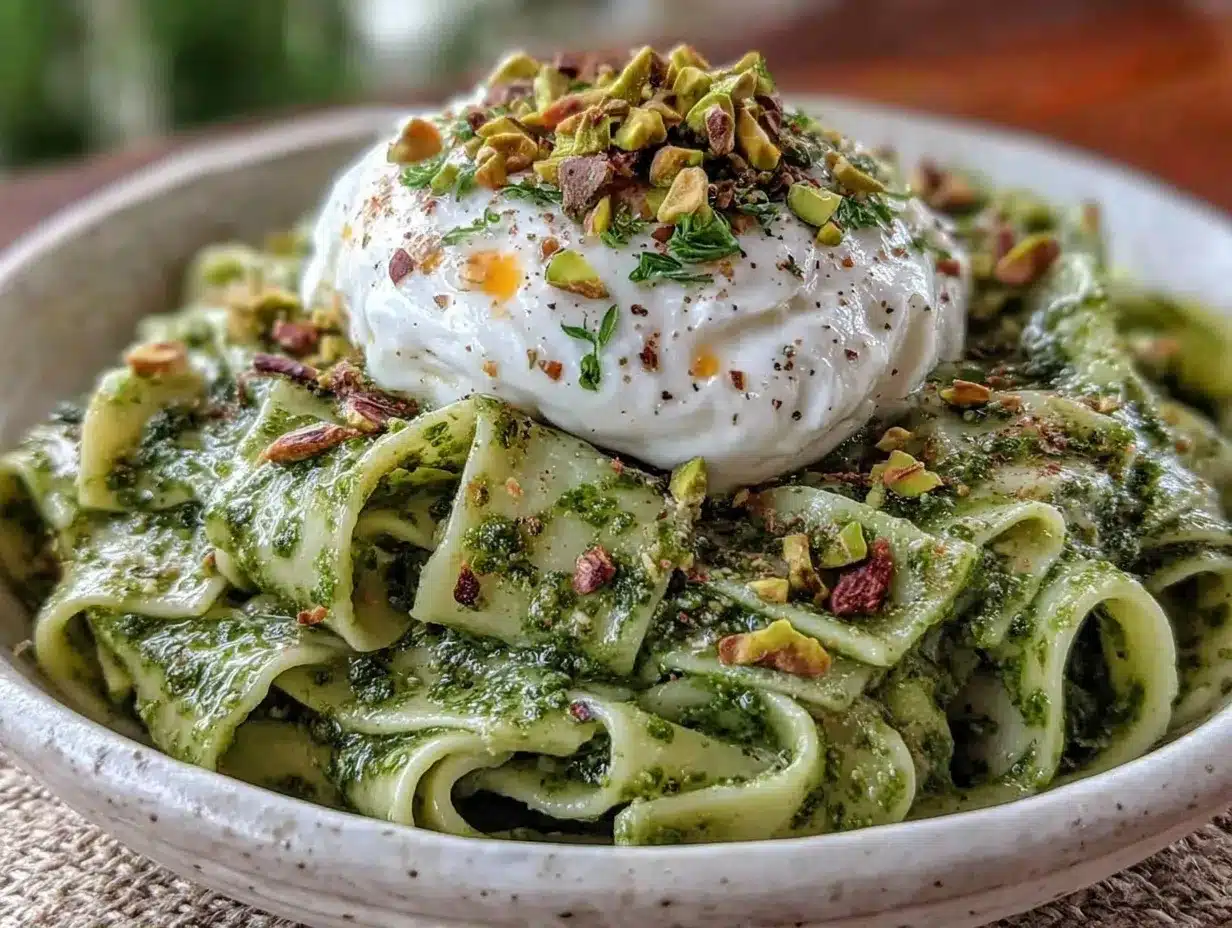
- Add the Burrata: Turn off the heat. This is the most important step. Take your burrata balls and tear them into large chunks. Gently fold the burrata into the hot pasta. The residual heat will start to melt the cheese, creating creamy ribbons throughout the dish. Be gentle here; you want chunks of cheese, not a complete puree.
- Final Seasoning: Taste the pasta. Add more salt and black pepper if needed. Remember, the Parmesan and pistachios are salty, so go easy on the salt initially. Squeeze a little more lemon juice if you want a brighter flavor. Toss one last time to distribute the melted burrata evenly.
- Serve Immediately: Plate the pasta while it’s hot. Top with extra chopped pistachios for crunch and a drizzle of high-quality olive oil. Serve right away.
Don’t skip the pasta water. I know it seems like a weird step, but it’s the difference between a greasy pile of pasta and a silky, cohesive meal. The starch helps the sauce cling to every noodle.
Cooking Tips & Techniques
I’ve learned a few things the hard way, so you don’t have to. Here are some pro tips to ensure your creamy burrata pistachio pesto pasta turns out perfectly every time.
First, don’t overblend the pesto. If you blend the basil too long, it can turn brown and bitter. Pulse it until it’s just combined. You want it to be vibrant green. Also, keep the pistachios separate until the end of the blending process. This ensures you get that nice crunch in the final dish rather than a uniform paste.
Second, control the heat. When you add the burrata, make sure the pan is off the heat. If the pan is too hot, the cheese might separate or become oily instead of melting smoothly. You want gentle warmth, not sizzling heat. The residual heat from the pasta is enough to do the job.
Third, use fresh ingredients. This recipe relies on the freshness of the basil and the quality of the cheese. If your basil is old and slimy, the pesto will taste off. Same with the burrata; if it’s been sitting in the fridge for a week, it won’t have that creamy, milky flavor. Buy it the same day you plan to cook.
Lastly, multitask wisely. Have your ingredients prepped before you start boiling the water. Chopped nuts, grated cheese, torn basil. Everything needs to go into the blender quickly. If you’re waiting for the water to boil to chop garlic, you’ll be rushing later. Prep first, cook second.
Variations & Adaptations
One of the best things about this recipe is how flexible it is. Here are a few ways I’ve changed it up to keep things interesting.
Add Protein: For a heartier meal, I often add grilled chicken breast or shrimp. Sauté the protein separately and toss it in at the end. The pesto pairs beautifully with both.
Vegetable Boost: Roasted cherry tomatoes are amazing with this. Toss halved tomatoes with olive oil and roast them at 400°F (200°C) for 15 minutes. Add them to the pasta for a burst of sweetness and acidity.
Nut Swap: If you don’t have pistachios, almonds or walnuts work well. Toast them lightly in a dry pan before blending to bring out their natural oils. Pine nuts are the traditional choice for pesto, but pistachios add a unique, sophisticated flavor.
Gluten-Free Option: Use your favorite gluten-free pasta. Note that GF pasta can sometimes be more fragile, so handle it gently when tossing with the sauce. You might need a bit more pasta water to help the sauce stick.
I once made this with roasted butternut squash cubes. It was surprisingly delicious and added a nice autumnal twist. Don’t be afraid to experiment with what’s in your fridge.
Serving & Storage Suggestions
This pasta is best served immediately while the burrata is still slightly warm and melty. I like to serve it with a simple arugula salad on the side. The peppery greens cut through the richness of the pasta perfectly. A glass of crisp white wine, like a Pinot Grigio or Sauvignon Blanc, is also a great pairing.
If you have leftovers (though I doubt you will), store them in an airtight container in the refrigerator for up to 2 days. The pasta will absorb the sauce, so it might look dry when you take it out. When reheating, add a splash of water or milk to loosen the sauce. Reheat gently in a skillet over low heat. Do not microwave it, as the burrata can separate and become grainy.
The flavors actually meld nicely over time, so day-old pasta still tastes great. Just give it a good toss with some fresh basil before eating. It’s a great meal prep option if you’re willing to sacrifice the fresh burrata texture.
Nutritional Information & Benefits
This dish is fairly balanced, though it is rich due to the cheese and nuts. A typical serving provides a good amount of healthy fats from the olive oil and pistachios, which are heart-healthy. The basil adds vitamins A and K, and the Parmesan provides calcium and protein.
It is not low-carb, so if you are watching your carb intake, consider using a smaller portion of pasta and doubling the vegetables. It is naturally vegetarian and can be made gluten-free. For those with dairy sensitivities, the burrata can be substituted, but the flavor profile will change significantly.
From a wellness perspective, I love this recipe because it feels indulgent but uses real, whole foods. It’s not processed junk. It’s fresh basil, real cheese, and quality nuts. It’s a great way to enjoy comfort food without feeling guilty afterward.
Conclusion
I hope you try this creamy burrata pistachio pesto pasta. It’s become a staple in my home for a reason. It’s fast, it’s delicious, and it makes even the most ordinary weeknight feel special. Whether you’re cooking for one or feeding a crowd, this recipe delivers.
Feel free to tweak it to your liking. Add more spice, less garlic, or extra veggies. Make it your own. And if you do make it, I’d love to hear how it turned out. Leave a comment below with your thoughts or share a photo if you tag me. Cooking is better when we share it.
Happy cooking! Let’s make something amazing together.
Frequently Asked Questions
Can I use dried basil instead of fresh?
It’s not recommended. Dried basil has a very different, more muted flavor and lacks the fresh, aromatic quality that makes this pesto special. Fresh basil is key for the bright taste.
What kind of pasta works best?
Spaghetti and linguine are traditional because they hold the sauce well. Penne or fusilli can also work if you prefer a shorter shape, but the long strands are best for swirling the burrata.
Can I make the pesto ahead of time?
Yes, you can make the pesto up to 2 days in advance. Store it in an airtight container with a thin layer of olive oil on top to prevent browning. Bring it to room temperature before using.
Is burrata necessary?
For this specific creamy texture, yes. Fresh mozzarella is a good substitute, but it won’t melt as luxuriously. Ricotta can also work but will make the dish heavier and less tangy.
How do I prevent the pesto from turning brown?
Blending with lemon juice helps, but the main culprit is oxidation. Use fresh ingredients and store the pesto properly with a layer of oil on top. Avoid over-processing the basil.
Pin This Recipe!
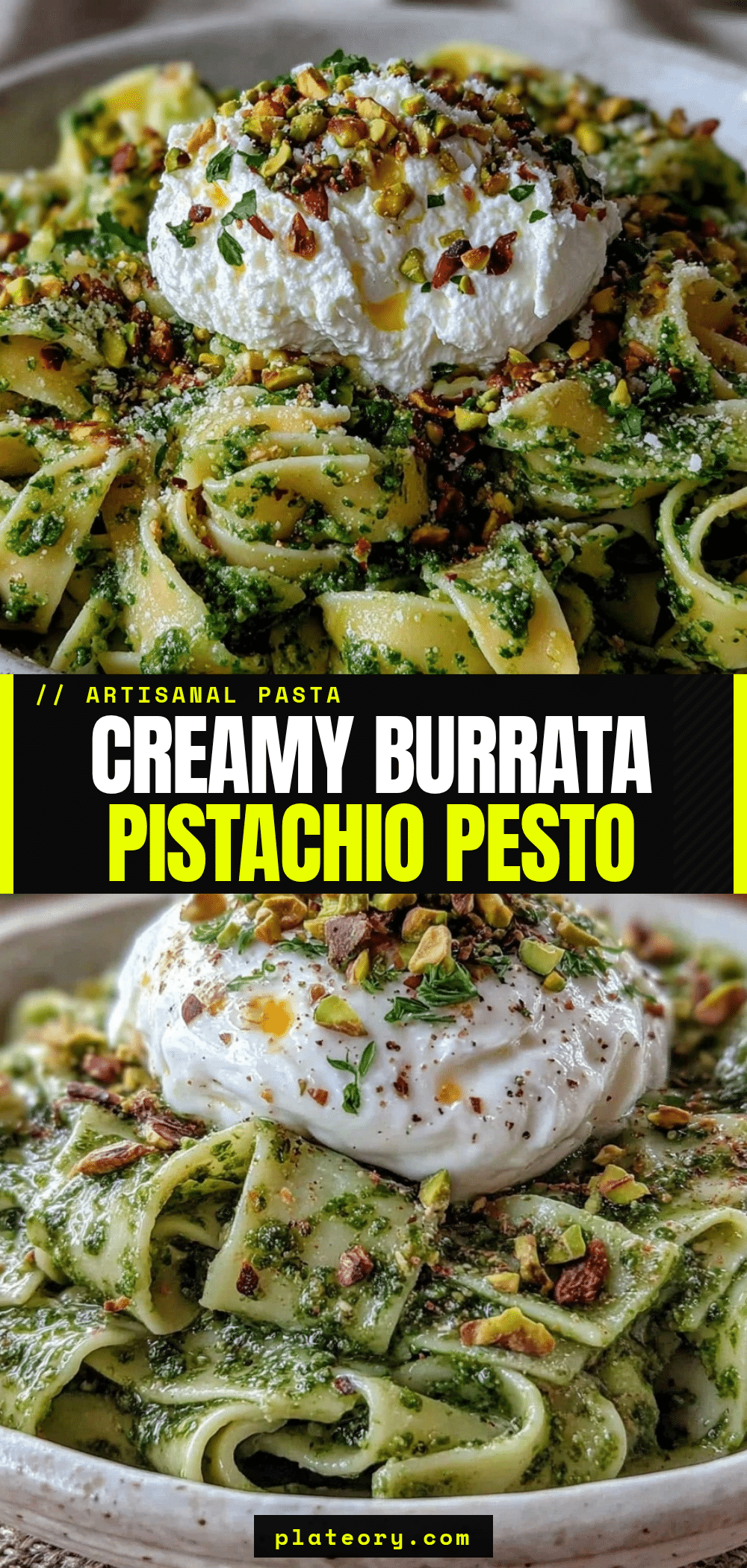

Creamy Burrata Pistachio Pesto Pasta
- Total Time: 30 minutes
- Yield: 4 servings 1x
Description
A luxurious and velvety pasta dish combining nutty pistachio pesto with melting fresh burrata cheese, ready in under 30 minutes.
Ingredients
- 1 pound (450g) spaghetti or linguine
- 2 large balls fresh burrata cheese (approx. 8 oz / 225g)
- 1 cup (120g) unsalted roasted pistachios
- 2 cups packed fresh basil leaves
- 2–3 cloves fresh garlic
- 1/2 cup (50g) grated Parmigiano-Reggiano
- 1/3 cup (80ml) extra virgin olive oil
- Juice of 1/2 lemon
- 1 cup reserved starchy pasta water
- Sea salt and freshly cracked black pepper to taste
Instructions
- Bring a large pot of salted water to a rolling boil. Cook pasta until al dente. Reserve 1 cup of pasta water before draining.
- In a blender or food processor, pulse pistachios until finely chopped. Add basil, garlic, Parmesan, lemon juice, and half the olive oil. Pulse until combined. Add pasta water or more oil if needed to reach desired consistency.
- In a large skillet over medium heat, add a tablespoon of olive oil. Add drained pasta and pour pesto mixture over it. Toss to combine, adding reserved pasta water as needed to create a silky emulsion.
- Turn off the heat. Tear burrata into large chunks and gently fold into the hot pasta. The residual heat will melt the cheese into creamy ribbons.
- Taste and season with salt and pepper. Add more lemon juice if desired for brightness.
- Serve immediately, topped with extra chopped pistachios and a drizzle of olive oil.
Notes
Do not overblend the pesto to prevent browning. Ensure the pan is off the heat when adding burrata to prevent the cheese from separating. Use fresh ingredients for best flavor. Leftovers can be stored in the refrigerator for up to 2 days; reheat gently with a splash of water or milk.
- Prep Time: 10 minutes
- Cook Time: 20 minutes
- Category: Main Course
- Cuisine: Italian
Nutrition
- Serving Size: 1 plate
- Calories: 650
- Sugar: 3
- Sodium: 450
- Fat: 35
- Saturated Fat: 12
- Carbohydrates: 60
- Fiber: 4
- Protein: 22
Keywords: pasta, burrata, pesto, pistachio, quick dinner, vegetarian, creamy pasta, weeknight meal, Italian food