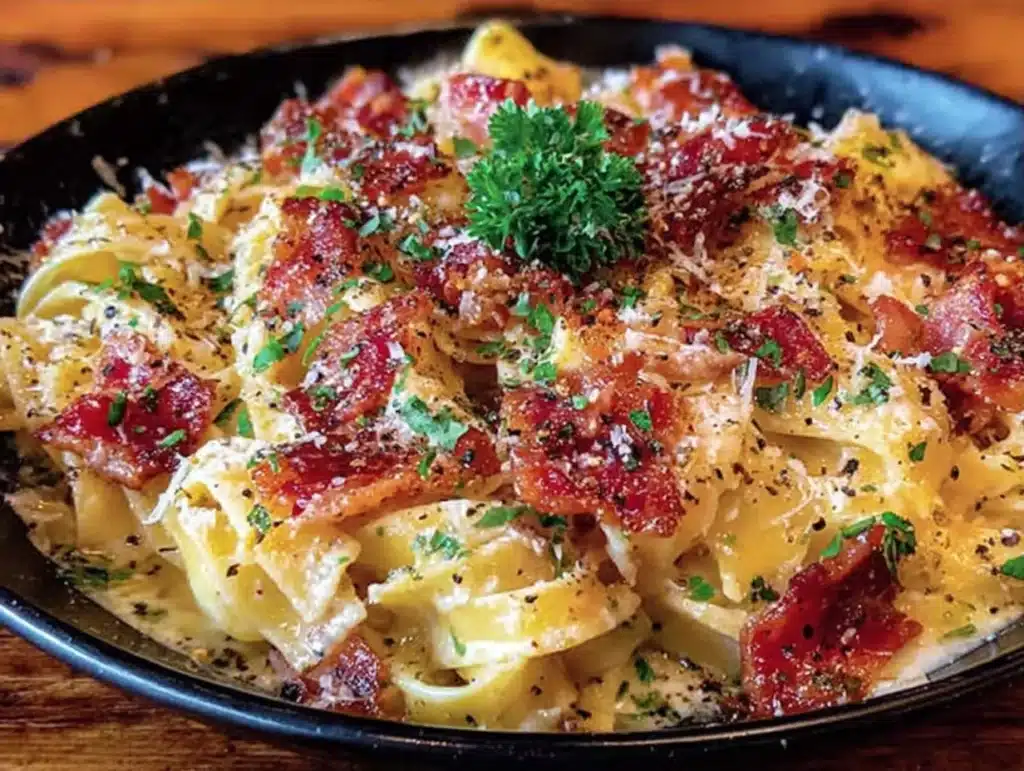
There is a specific kind of magic that happens when you stop trying to be clever in the kitchen. It usually happens on a Tuesday night when you are tired, hungry, and just want something that tastes like it came from a nonna in Rome, not a food blog in California. I learned this the hard way after burning my first batch of carbonara. Honestly, it was a disaster. The eggs scrambled into little yellow curds, and I felt like I had failed basic Italian cooking 101.
But here is the thing about Classic Bacon Carbonara Pasta. It is not complicated, but it is unforgiving. It demands your full attention. I first fell in love with this dish during a trip to Naples, sitting at a tiny table with a view of the harbor. The pasta was al dente, the guanciale was crisp like a chip, and the sauce was creamy without a single drop of cream in sight. That experience changed how I cook forever. I realized that simplicity is actually the hardest thing to master.
This recipe is my answer to that memory. It is quick, it uses ingredients you probably already have, and it delivers that soul-soothing comfort we all crave. You know, sometimes you just need carbs and cheese to feel better. This dish is perfect for busy weeknights, date nights, or when you want to impress guests without spending hours in the kitchen. It is reliable, too. I have tested this version over a dozen times to get the texture just right. It is the kind of meal that makes you close your eyes after the first bite.
Why You’ll Love This Recipe
Let’s be honest for a second. There are a million pasta recipes out there. So why should you make this one? It comes down to texture and flavor balance. Most people think carbonara is just pasta with eggs. It is so much more than that. It is a lesson in emulsion. When you do it right, the sauce clings to every strand of pasta like a warm hug. It is rich, savory, and deeply satisfying without being heavy.
Here is what makes this specific version stand out from the crowd:
- Quick & Easy: You can have this on the table in under 20 minutes. It is the ultimate rescue recipe for those evenings when dinner feels like a chore. You don’t need to prep for hours.
- Simple Ingredients: You likely have everything in your fridge right now. Eggs, cheese, cured pork, and pasta. No obscure spices or fancy imports required. It proves that good cooking doesn’t need to be complicated.
- Crowd-Pleaser: This dish is a universal hit. Kids love the creaminess, and adults appreciate the savory depth. It is perfect for family dinners or casual potlucks where you want to bring something impressive.
- Unbelievably Delicious: The combination of salty pork and sharp cheese creates a flavor profile that is addictive. It is comfort food at its finest. The texture is silky, not eggy.
- Authentic Technique: This recipe uses the traditional method of tempering the eggs. It prevents scrambling and ensures a smooth, glossy sauce. I learned this trick after years of trial and error.
This isn’t just another pasta recipe. It is a return to roots. It taps into that Italian philosophy of using few, high-quality ingredients to make something extraordinary. It is fast, but it feels luxurious. You can make this for a cozy dinner for two or a large gathering. It scales well, and the flavors only get better as you sit and eat. It turns a simple meal into a memorable experience.
What Ingredients You Will Need
The beauty of Classic Bacon Carbonara Pasta lies in its minimalism. You do not need a pantry full of exotic spices. You need quality. Since there are so few ingredients, each one plays a critical role. If you use low-quality cheese, the dish will taste flat. If your pork is bland, the whole dish suffers. Let’s break down what you need and why it matters.
- Pasta: You need a long, thin pasta. Spaghetti is the classic choice, but linguine or rigatoni work well too. I prefer spaghetti because it holds the sauce beautifully. Look for bronze-die extruded pasta if you can find it. It has a rougher texture that grabs the sauce better. You will need about 400 grams.
- Cured Pork: Traditionally, this is guanciale (cured pork jowl). However, since you asked for bacon, we will use high-quality thick-cut bacon. Look for bacon that is smoked but not overly sweet. You want that salty, smoky punch. Avoid the thin, crispy bacon bits. You need slices or chunks that render down into crisp bits. You will need about 200 grams.
- Eggs: This is the base of the sauce. You will use whole eggs and one extra yolk. The yolk adds richness and color. Use large, fresh eggs. Room temperature eggs mix more easily with the cheese, preventing clumps. Do not skip the extra yolk; it makes the sauce silkier.
- Cheese: Pecorino Romano is the traditional choice. It is sharp, salty, and tangy. Parmigiano-Reggiano is milder and nuttier. I often use a mix of both to balance the sharpness. Make sure it is freshly grated. Pre-grated cheese has anti-caking agents that prevent it from melting smoothly. You will need about 100 grams, finely grated.
- Black Pepper: Freshly cracked black pepper is essential. It adds a spicy bite that cuts through the richness of the eggs and cheese. Use a pepper mill and grind it coarse. Pre-ground pepper lacks the aromatic oils that make this dish sing. You will need about two teaspoons.
- Salt: You will need salt for the pasta water. The water should taste like the sea. This seasons the pasta from the inside out. Do not skip this step. You will also need salt to taste at the end.
Substitutions are possible if you have dietary needs. You can swap the bacon for turkey bacon, though the flavor will be lighter. For a vegetarian version, you can use smoked tempeh or mushrooms, but it won’t be the same. I recommend sticking to the traditional ingredients for the best result. The quality of your cheese and pork is what makes or breaks this dish.
Equipment Needed
You do not need a fancy kitchen to make this dish. A few basic tools will get you the best results. Here is what you need to have ready before you start cooking.
- Large Skillet: You need a skillet large enough to hold the pasta and sauce. A cast-iron skillet is great because it holds heat well, but a stainless steel or non-stick pan works too. Just make sure it is wide so the pasta can move around freely.
- Mixing Bowl: A medium bowl is needed to whisk the eggs and cheese together. Make sure it is large enough to handle the hot pasta water when you temper the eggs.
- Whisk: A simple wire whisk is all you need to create a smooth egg mixture. Avoid using a fork, as it won’t blend the cheese and eggs as thoroughly.
- Tongs: Tongs are essential for tossing the pasta. They give you better control than a spoon or fork, especially when mixing the hot pasta with the delicate egg sauce.
- Grater: A microplane or fine grater is best for the cheese. It ensures the cheese melts instantly into the sauce. A box grater works, but the cheese might be too chunky.
- Colander: You need a colander to drain the pasta. Reserve some pasta water before you drain it. This starchy water is liquid gold for the sauce.
If you do not have a large skillet, you can use a Dutch oven. It is heavier but works just as well. For the cheese, if you cannot find Pecorino, Parmesan is a fine substitute. Just know the flavor will be milder. The key is to have all your tools within arm’s reach. This dish cooks fast, and you do not want to be hunting for a whisk when the bacon is already crisp.
How to Make Classic Bacon Carbonara Pasta
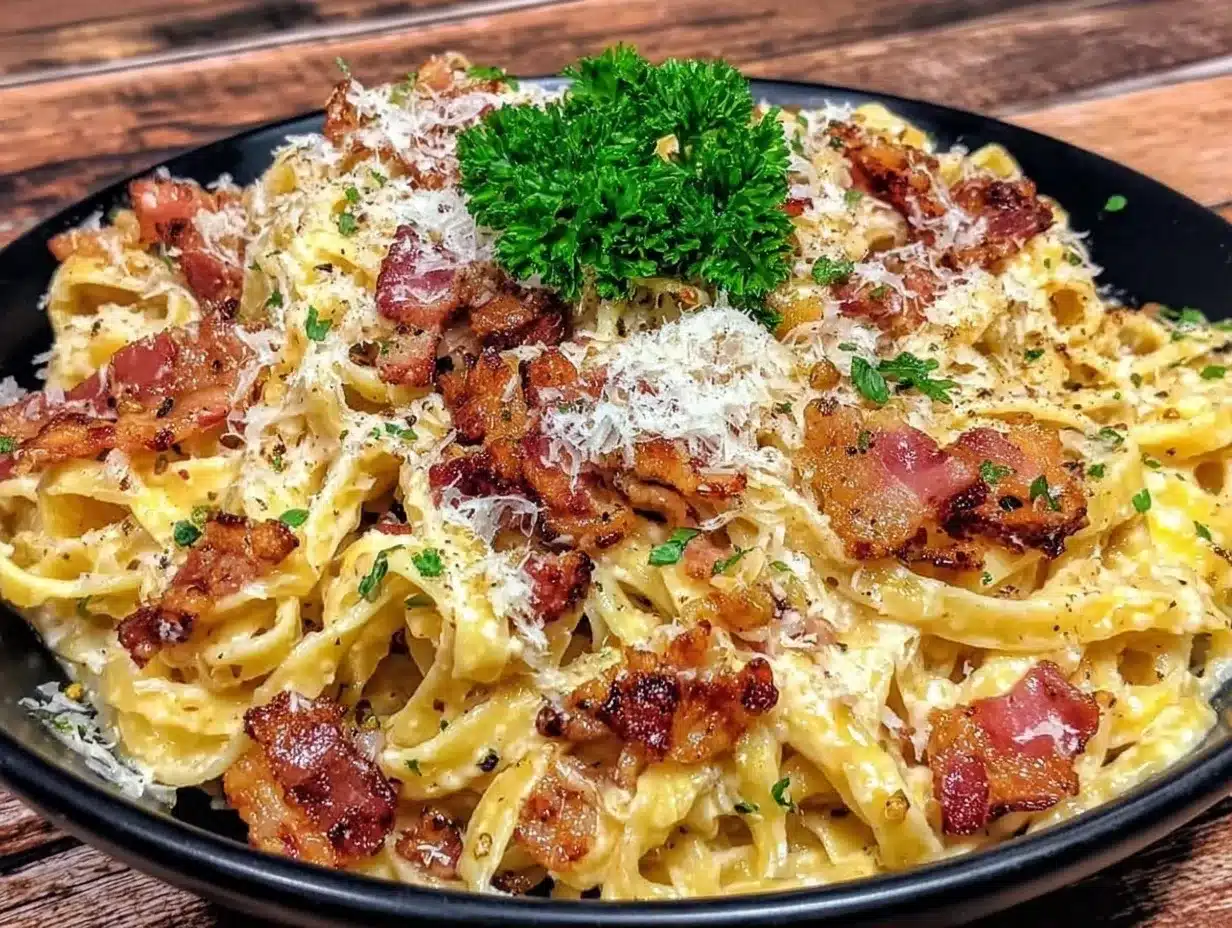
Now for the fun part. Making the pasta. This process is straightforward, but timing is everything. Here is how to do it step by step.
Step 1: Prep the Ingredients
Start by grating your cheese and cracking your eggs. Whisk the whole eggs and the extra yolk in a medium bowl. Add the grated cheese and a generous amount of freshly cracked black pepper. Whisk until it forms a thick, yellow paste. Set this aside. Cut the bacon into small, bite-sized pieces. Having everything ready before you turn on the stove is crucial. This dish comes together in minutes, so you do not have time to chop while water boils.
Step 2: Cook the Pasta
Bring a large pot of water to a boil. Add a generous amount of salt. The water should be salty like the ocean. Add the spaghetti and cook according to the package directions, but start checking it one minute early. You want it al dente, meaning it still has a slight bite. Before you drain the pasta, scoop out about one cup of the starchy pasta water. This is your secret weapon. Drain the pasta, but do not rinse it. Rinsing removes the starch that helps the sauce cling.
Step 3: Render the Bacon
While the pasta cooks, heat a large skillet over medium heat. Add the bacon pieces. Do not add any oil. The bacon will release its own fat. Cook it slowly, stirring occasionally, until it is golden brown and crisp. This should take about 5-7 minutes. If the pan gets too dry, you can add a splash of water, but usually, the bacon provides enough fat. Once crisp, remove the bacon from the pan, leaving the rendered fat behind. Set the bacon aside on a plate.
Step 4: Temper the Eggs
This is the most critical step. Turn the heat under the skillet to low. Add the hot, drained pasta directly into the skillet with the bacon fat. Toss the pasta to coat it in the fat. Then, remove the skillet from the heat entirely. Let it sit for about 30 seconds to cool down slightly. If the pan is too hot, the eggs will scramble. Pour the egg and cheese mixture over the hot pasta. Immediately start tossing and stirring with tongs. The residual heat will cook the eggs gently, creating a creamy sauce. If it looks too thick, add a splash of the reserved pasta water.
Step 5: Combine and Serve
Once the sauce is creamy and coats the pasta, add the crispy bacon back into the pan. Toss everything together one last time. Taste the pasta. Add more black pepper if needed. Remember, the cheese and bacon are salty, so you probably do not need extra salt. Serve immediately on warm plates. Top with a little extra cheese and pepper. Eat it while it is hot. This dish does not wait for anyone.
Cooking Tips & Techniques
There are a few common mistakes people make with carbonara. Let’s avoid them together. The biggest error is using heat that is too high. The eggs are delicate. If the pan is hot when you add the eggs, you will get scrambled eggs on your pasta. Nobody wants that. Always remove the pan from the heat before adding the egg mixture. The residual heat is enough to cook the eggs to a custard-like consistency.
Another tip is to use pasta water wisely. The starch in the water helps emulsify the sauce. If your sauce looks too thick or clumpy, add a splash of pasta water and keep tossing. It should become glossy and smooth. Do not be afraid to add more water. It is better to have a loose sauce than a thick, pasty one.
Also, do not skip the black pepper. It is not just a garnish. It is a key flavor component. The heat from the pepper balances the richness of the eggs. Use a good amount. I like to see visible specks of pepper in every bite. It adds a nice kick.
Finally, serve the dish immediately. Carbonara does not hold well. It will continue to thicken as it cools. If you are serving a crowd, make the sauce in batches. It is better to have two small pans than one big one that turns into a solid block of egg. Keep the plates warm in the oven. This helps maintain the temperature of the sauce.
Variations & Adaptations
While I love the classic version, there are ways to tweak this recipe to suit your tastes. Here are a few ideas.
Spicy Carbonara
Add a pinch of red pepper flakes to the egg mixture. This gives the dish a subtle heat that complements the salty bacon. It is great if you like a little kick. You can also add chopped fresh parsley for a burst of color and freshness.
Vegetarian Option
Swap the bacon for sautéed mushrooms. Cremini or shiitake mushrooms work well. Sauté them in olive oil until they are browned and crispy. They provide a similar umami flavor to the pork. You can also add peas or spinach at the end for a pop of color.
Cheese Swap
If you do not like Pecorino, use all Parmesan. It is milder and sweeter. You can also add a handful of fontina cheese for extra creaminess. Fontina melts beautifully and adds a nutty flavor. Experiment with different cheeses to find your favorite combination.
Gluten-Free
Use gluten-free spaghetti. Many brands now work well in creamy sauces. Just be careful not to overcook them, as they can become mushy faster than wheat pasta. Rinse them briefly with cold water to stop the cooking process if needed.
These variations allow you to keep the spirit of the dish while making it your own. The base recipe is flexible. Feel free to add your own twists. The key is to keep the technique the same. The emulsion is what makes it work, regardless of the ingredients.
Serving & Storage Suggestions
This dish is best served immediately. It is a hot, creamy meal that shines when it is fresh out of the pan. Serve it with a simple green salad to balance the richness. A light vinaigrette cuts through the creaminess perfectly. You can also serve it with crusty bread to soak up any extra sauce.
If you have leftovers, store them in an airtight container in the refrigerator. The pasta will absorb the sauce and become firmer. It will keep for up to two days. To reheat, add a splash of water or milk to the pan. Heat it gently over low heat, stirring constantly. Do not use the microwave, as it will scramble the eggs. Gently reheating in a pan restores the creaminess.
Do not freeze this dish. The eggs will separate and become grainy when thawed. It is not worth the risk. Carbonara is meant to be made fresh. It is a quick meal for a reason. Enjoy it while it is hot and creamy. The flavors are at their peak when the dish is new.
Nutritional Information & Benefits
This dish is rich in protein and calcium. The eggs provide high-quality protein, while the cheese adds calcium and flavor. The bacon adds fat, which helps you feel full. However, it is also high in sodium due to the cured pork and cheese. Enjoy it in moderation. It is a treat, not a daily staple.
For those watching their carb intake, you can reduce the pasta portion and add more vegetables. Zucchini or broccoli can add volume without many calories. The dish is naturally gluten-free if you use gluten-free pasta. It is also dairy-free if you substitute the cheese with nutritional yeast, though the texture will be different.
From a wellness perspective, this dish is satisfying. It hits all the major flavor groups: salty, savory, and rich. It is comforting and nourishing. I often make it when I need a mood boost. It is simple, honest food. Just remember to balance it with lighter meals during the week.
Conclusion
Making Classic Bacon Carbonara Pasta is a journey. It starts with simple ingredients and ends with a masterpiece. It is a dish with a reason behind it. It reminds us that good food does not need to be complicated. It just needs to be made with care. I hope this recipe brings you the same joy it has brought me. It is a staple in my kitchen for a reason.
I encourage you to try this recipe and make it your own. Experiment with different peppers or cheeses. Share it with friends and family. I love hearing how people adapt recipes to their lives. Please leave a comment below and let me know how it turned out. Did you use guanciale or bacon? What did you serve with it? I read every comment and love connecting with fellow food lovers.
Happy cooking! Remember, the best meals are the ones shared with people you love. Enjoy every bite of this creamy, savory delight.
Frequently Asked Questions
Can I use cream in carbonara?
Traditionally, no. Cream is not used in authentic Italian carbonara. The creaminess comes from the emulsion of eggs, cheese, and pasta water. Adding cream can make the dish heavy and mask the flavor of the pork. However, some modern variations do use a splash of cream. It is up to you, but for the best texture, stick to the egg and cheese method.
Why did my eggs scramble?
This usually happens if the pan is too hot when you add the egg mixture. Always remove the pan from the heat before adding the eggs. The residual heat is enough to cook them gently. If your pan retains heat well, let it cool for a minute or two before adding the eggs. Tossing quickly also helps distribute the heat evenly.
Can I use regular bacon instead of guanciale?
Yes, absolutely. While guanciale is traditional, thick-cut bacon is a great substitute. It provides the necessary salt and fat. Just make sure to use bacon that is not too sweet. You want a savory, smoky flavor. Cut it into small pieces and render the fat slowly for the best results.
How do I store leftover carbonara?
Store leftovers in an airtight container in the refrigerator for up to two days. The pasta will absorb the sauce, so it may look dry. Reheat it gently in a pan with a splash of water or milk. Do not freeze it, as the eggs will separate and become grainy.
What is the best pasta for carbonara?
Spaghetti is the most common choice. It holds the sauce well and is easy to twirl. Linguine and rigatoni are also good options. Use long, thin pasta for the best texture. Avoid thick pasta like pappardelle, as the sauce may not coat it evenly. Bronze-die extruded pasta is best because it has a rougher surface that grabs the sauce.
Pin This Recipe!
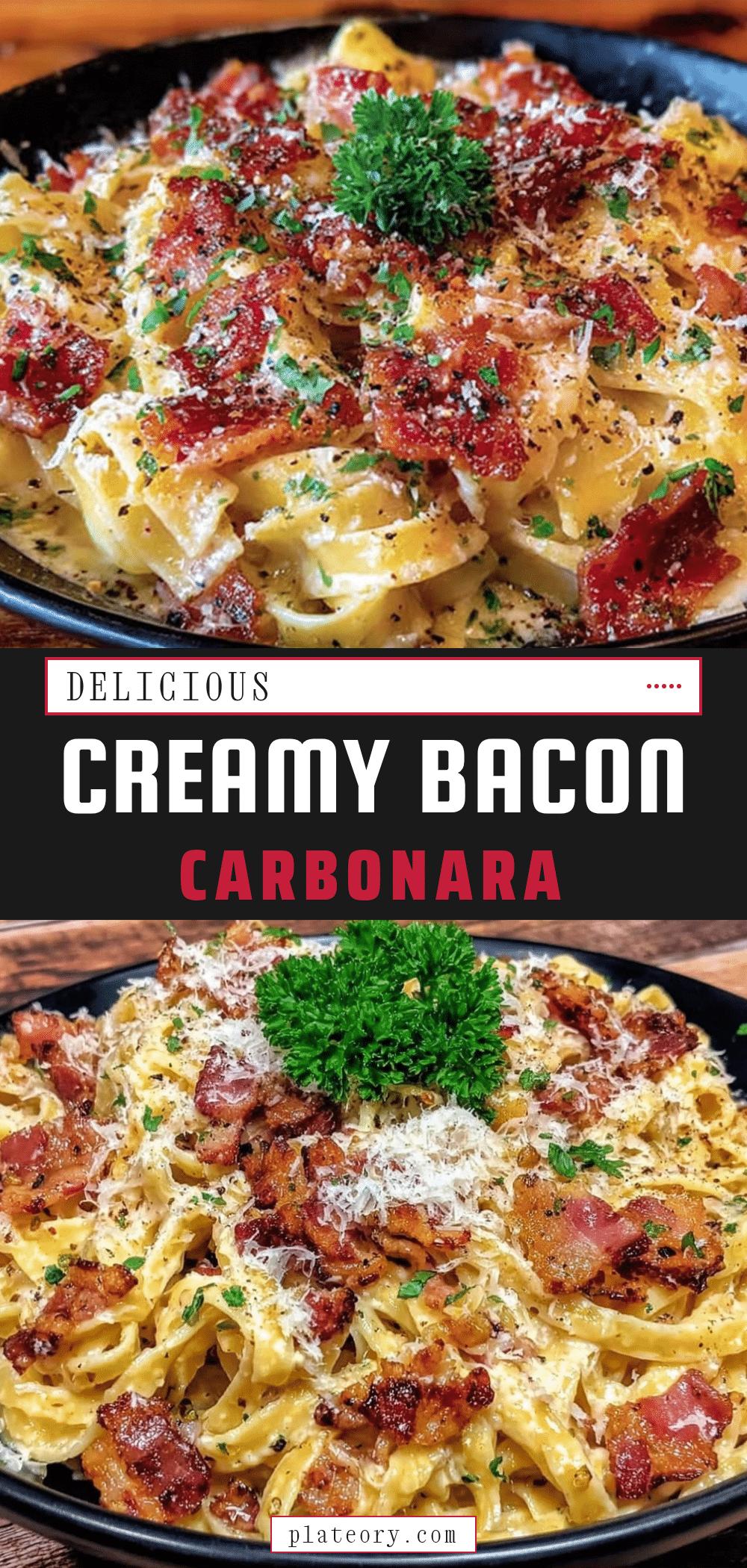

Classic Bacon Carbonara Pasta
- Total Time: 20 minutes
- Yield: 4 servings 1x
Description
A quick, authentic Italian pasta dish made with eggs, cheese, cured pork, and black pepper. This recipe delivers a creamy, silky sauce without using cream, relying on proper technique for the perfect texture.
Ingredients
- 400g spaghetti (or linguine/rigatoni)
- 200g thick-cut bacon, cut into bite-sized pieces
- 3 large eggs, room temperature
- 1 extra egg yolk
- 100g Pecorino Romano and/or Parmigiano-Reggiano, finely grated
- 2 teaspoons freshly cracked black pepper
- Salt for pasta water
Instructions
- Grate the cheese and crack the eggs. Whisk the whole eggs and extra yolk in a medium bowl with the grated cheese and black pepper until a thick paste forms. Set aside.
- Cut the bacon into small pieces. Have all ingredients prepped before starting.
- Bring a large pot of water to a boil and add a generous amount of salt. Cook the spaghetti until al dente.
- Before draining, reserve about one cup of starchy pasta water. Drain the pasta, but do not rinse it.
- While pasta cooks, heat a large skillet over medium heat. Add the bacon and cook slowly until golden brown and crisp (5-7 minutes). Remove bacon, leaving the rendered fat in the pan.
- Turn the skillet heat to low. Add the hot drained pasta to the skillet with the bacon fat and toss to coat.
- Remove the skillet from the heat entirely and let it sit for 30 seconds to cool slightly.
- Pour the egg and cheese mixture over the hot pasta. Immediately toss and stir with tongs. The residual heat will cook the eggs gently into a creamy sauce. Add reserved pasta water if the sauce is too thick.
- Add the crispy bacon back into the pan and toss to combine.
- Taste and adjust with more black pepper if needed. Serve immediately on warm plates.
Notes
Do not use high heat when adding the egg mixture, or the eggs will scramble. Always remove the pan from the heat before tempering the eggs. Use freshly grated cheese to ensure smooth melting. This dish does not freeze well; the eggs will separate upon thawing. Serve immediately for the best texture.
- Prep Time: 5 minutes
- Cook Time: 15 minutes
- Category: Main Course
- Cuisine: Italian
Nutrition
- Serving Size: 1 plate
- Calories: 650
- Sugar: 2
- Sodium: 900
- Fat: 35
- Saturated Fat: 12
- Carbohydrates: 60
- Fiber: 3
- Protein: 25
Keywords: carbonara, pasta, bacon, italian recipe, quick dinner, weeknight meal, comfort food, egg sauce, guanciale substitute